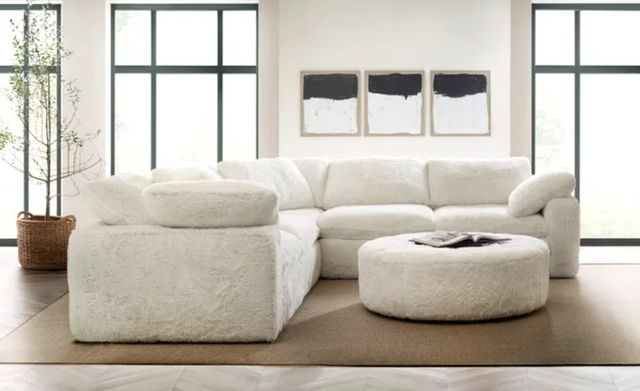
The cream sofa at home is only two years old and it already has a gray halo where everyone’s head lands, plus a shadow on the arm where the dog leans. So standing in front of a bright, beautiful sectional with a phone in one hand and a tape measure in the other feels less like shopping and more like a risk assessment. There is a toddler with a juice cup in the picture. There is a dog that will claim the chaise within an hour of delivery. The fear is not that a white sectional sofa will look bad on day one, because it will look incredible on day one. The fear is that it looks tired by next spring, and that the money is gone either way.
See White Sectionals in Person Before You Commit
Our team helps you compare performance fabrics, cleaning codes, and sectional layouts side by side, then handles delivery and setup so it fits and works on day one. Ask for a swatch to take home.
Explore white sectional sofaHere is the part most shoppers never hear before the order is written. White upholstery does not fail because it is white. It fails when the fabric, the frame, the cushions, and the cleaning plan do not match how the household actually lives, and any one of those four can be fixed at the point of purchase. At Kelley Appliance Center, our team walks people through this every week, which is why this guide covers what durability really means in upholstery, which performance and cleanable fabrics hold up, how to pick the right shade of white sectional sofa for your room, what the frame and cushions have to get right, how slipcovers and washable covers change the math, how to size and configure the pieces, and a cleaning routine you will actually keep.
Key Takeaways
• Fabric decides daily livability, construction decides lifespan: The cleaning code and weave determine whether a spill is a two-minute fix or a permanent mark, while the frame, suspension, and cushion cores determine whether the piece still sits well in year ten.
• White is a range, not one color: True white, snow, ivory, cream, oatmeal, and natural all read as white in a room, and the warmer tones hide light soil, dust, and sun shift noticeably better than optic white.
• Code W and code WS fabrics are the family-friendly choices: Both allow water-based spot cleaning at home, while a solvent-only or professional-clean-only fabric turns every juice spill into a scheduling problem.
• Removable covers change the cost per year: A well-built frame outlives its upholstery, so zippered cushion covers, full slipcovers, or a fabric a local retailer can service extend the useful life well past the fabric’s own.
What Makes a White Sectional Sofa Long-Lasting? The Four Things That Actually Matter
A white sectional sofa lasts when four systems hold up together: the fabric, the frame, the suspension and cushions, and the maintenance plan behind them. Weaken any one of the four and the whole piece ages early, no matter how good the other three are. This guide takes them in that order.
Here is the distinction most guides blur. White upholstery fails in two completely different ways, and they have nothing to do with each other.
Structural failure is a sagging seat deck, a cracked or racked frame, flattened cushion cores, and connectors that no longer hold two pieces tight together. Cosmetic failure is graying along the arms, an oily shadow at the head rests, blue dye transferred off denim, and stains that set before anyone got to them. A sectional can pass one test and fail the other completely. Plenty of people replace a structurally perfect sofa because it simply looks dirty, so both tests matter.
The Durability Vocabulary Worth Knowing Before You Shop
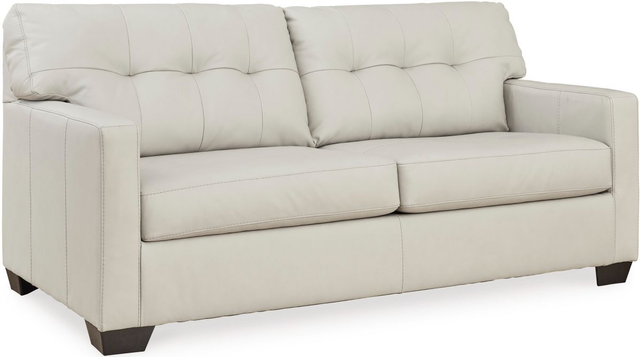
These terms show up on spec sheets and hang tags, and knowing them turns a sales conversation into a real comparison.
• Double rubs: the Wyzenbeek abrasion count, measuring how many passes a fabric takes before it shows wear. Heavy residential use is commonly cited around 15,000 double rubs and up.
• Pilling: small fiber balls that form on the surface as loose fibers work free, most visible on softer spun yarns.
• Colorfastness: how well a fabric resists fading and how well it resists picking up color from something else, such as denim.
• Stain resistance versus cleanability: resistance means the fabric holds liquid on the surface long enough to blot, while cleanability means you can remove what did soak in without damaging the fabric.
• Kiln-dried hardwood frame: lumber dried to a low moisture content so it does not warp, shrink, or split as it ages in your house.
• Foam density: the weight of a cubic foot of foam, which tracks closely with how long a cushion holds its shape.
Now the reality check on lifespan. A well-built sectional frame can easily outlive the fabric wrapped around it, which is why replaceable covers or a fabric your retailer can service quietly change the cost per year. A piece you keep for twelve years because the covers wash or the cores can be swapped is a very different purchase from one that gets hauled away in year five.
Before you shop, write down three things: who lives in the house including pets, how the room actually gets used on a normal Tuesday, and how much cleaning effort you will realistically do. Those three answers narrow the fabric list faster than any showroom tour.
Read more:
Top Features to Look for in a Sectional Couch with Recliner
6 Stylish Living Room Table Sets for Augusta Homes
Performance Fabrics and Cleanable Upholstery for a White Sectional
On a white piece, the fabric is the durability decision. Everything else can be excellent and the sectional will still look worn if the cover material cannot be cleaned in place. Start by separating three properties shoppers treat as one thing.
Stain resistance repels liquid long enough for you to blot it. Cleanability lets you get a mark out without leaving a ring or crushing the fibers. Abrasion resistance keeps the weave from thinning or pilling where bodies slide across it every day. A fabric can be strong in one and weak in another.
Performance Polyester and Performance Weaves
Soft, tightly woven, and matte in most versions. Cleanability is good with water-based cleaners, abrasion numbers are typically strong, and the price sits in the accessible middle. The honest drawback is that oil-based stains, such as sunscreen or greasy fingers, still need attention quickly.
Crypton and Moisture-Barrier Performance Fabrics
These carry a built-in moisture barrier so spills sit on top instead of reaching the cushion core. Feel is smooth with a firmer backing you can notice if you press on it. Cleanability is the best of the woven group and abrasion performance is high. The drawbacks are the price premium and the fact that some makers do not approve steam cleaning.
Solution-Dyed Acrylic
Color is added to the fiber before it is spun, so it runs all the way through. That makes it the best choice for a sunroom or a wall of south-facing glass, since fading is minimal and it cleans easily. The drawback is a drier, slightly crisper hand than plush indoor weaves.
Bleach-Cleanable Performance Fabrics
Engineered to survive a diluted bleach solution, which is a real advantage on white when a pigment stain such as berry juice sets in. The look is flat and practical. The drawback is that this only applies to fabrics specifically labeled bleach cleanable, and using bleach on anything else destroys it.
Performance Velvet and Chenille
Plush, rich, and the most comfortable feel in the group. Newer performance versions clean far better than traditional velvet did. The trade-off is pile behavior, since crushing and body marks show up more on a light color, and the pile needs brushing to look even.
Cotton and Linen Blends
Beautiful drape, breathable, and casual in the best way. Cleanability is the weakest of the group without a treatment, and untreated fibers wick a spill outward instead of holding it on the surface. Best kept to formal, low-traffic rooms unless the covers are washable.
White Leather and Top-Grain Leather
The wipe-clean alternative. A damp cloth handles most everyday messes, and a good hide develops character rather than looking worn. The drawbacks are cost, sensitivity to dye transfer from dark denim, and claw marks from pets that fabric would have hidden.
Cleaning Codes, Translated
Every upholstery tag carries a cleaning code, and it tells you more about daily livability than the fabric name does.
• Code W: clean with water-based cleaners. The most family-friendly option.
• Code S: solvent-only cleaners. Water leaves rings, so home cleanup gets restrictive.
• Code WS: either water-based or solvent cleaners work. The most forgiving code of all.
• Code X: vacuum and professional cleaning only. A poor match for a light sectional in a busy home.
For most households shopping a stain resistant sectional sofa, code W and code WS are the realistic choices, because they are the only ones that let you handle a spill the moment it happens.
The Showroom Test Almost Nobody Runs
Ask for a fabric sample to take home. Then run three checks before you order anything. Drip water on it and watch whether the drop beads up or wicks into the weave. Rub a scrap of dark denim across it firmly to see whether any blue comes off. Set the sample in the actual room for two days and look at it morning and night.
Weave structure matters as much as fiber content. Tight, low-texture weaves shed crumbs and pet hair and resist trapping soil. Deep boucle and heavy texture look beautiful and hold dirt down in the low points where a vacuum struggles. Looped textures also give a cat or a dog something to hook a claw into, which is how snags start.
White, Ivory, or Cream? Choosing a Shade That Stays Beautiful
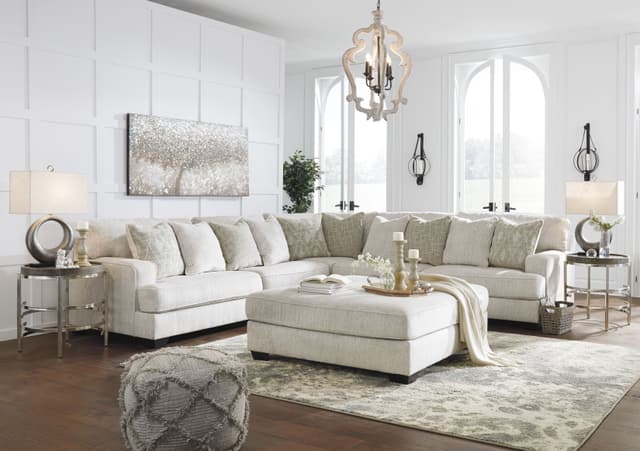
White upholstery is not one color. It is a family of tones that runs from optic or true white, through snow, ivory, cream, oatmeal, and natural, and the differences are more practical than decorative. Undertone, not just lightness, decides whether a piece reads clean or dingy three years in.
Optic or true white is bright and slightly cool, sometimes with a blue cast. Snow sits just beside it, clearly white with a softer edge. Ivory carries a yellow undertone. Cream is warmer still, with a buttery cast. Oatmeal and natural sit at the far warm end, a soft off-white with beige or greige in it that never reads as stark.
Here is the decision rule competitors skip. The warmer tones hide light soil, household dust, and gradual sun shift noticeably better, because the soil that lands on upholstery is mostly warm and gray in tone, and it disappears into a warm base. True white looks sharpest in a modern room with cool gray or blue-toned flooring and paint, and it stays looking right only if you keep up with it. Put a cool white next to warm oak floors and it can look stark. Put a cream piece against a bright white wall and it can look dirty by comparison even when it is spotless.
The room does the rest of the work. Direct south-facing sunlight fades any upholstery over time and yellows some fibers. Hard water leaves rings when you spot clean with tap water and let it air dry slowly. Humidity slows drying and encourages musty odor in cushion cores. Wood smoke deposits a fine warm film on everything in the room. Wall paint temperature shifts perceived color more than most people expect, so a swatch that looked ivory in the store can read yellow at home.
The Swatch Test That Prevents Regret
View swatches at three times of day, laid directly on your flooring and next to your rug and wall paint. Morning light, midday light, and lamp light at night are three different colors. Photograph the swatch with the room lights on as well, since phone cameras push undertones and it helps to see what the camera does before you start posting the room later.
One more factor changes this calculation entirely. A slipcovered sectional sofa or a piece with washable covers can be refreshed far more aggressively than fixed upholstery, so true white becomes a much safer choice when the covers come off and go in the machine. That discussion comes up in detail a couple of sections down.
White Sectional Sofa Upholstery Compared: Fabric, Cleanability, and Best Household
Find the row that matches the way your household lives, then read across before you commit to any white sectional sofa upholstery.
| Upholstery Option | Feel and Look | Stain and Spill Resistance | Cleaning Method | Best For | Watch Out For |
|---|---|---|---|---|---|
| Performance Polyester Weave | Soft, tight, matte everyday finish | Strong on water-based spills | Water-based spot clean, code W | Busy families, mid range | Oily stains still need fast attention |
| Crypton or Moisture-Barrier Performance Fabric | Smooth hand, firmer backing | Blocks liquid from reaching cushions | Water-based cleaner, code W or WS | Kids and pets, premium tier | Steam only if the maker approves |
| Solution-Dyed Acrylic | Crisp, dry, lightly textured | Excellent, color runs through fiber | Water-based clean, fade resistant | Sunrooms and bright south windows | Firmer hand than plush weaves |
| Bleach-Cleanable Performance Fabric | Flat, practical, low sheen | Handles pigment stains best | Diluted bleach solution when labeled | Light upholstery in heavy traffic | Only when the label allows bleach |
| Performance Velvet or Chenille | Plush, rich, light-catching pile | Good, though pile shows marks | Brush plus water-based spot clean | Style-forward, lower-traffic rooms | Pile crushes and shows body marks |
| Cotton or Linen Blend | Relaxed, breathable, natural drape | Weakest without a treatment | Spot clean, often professional | Formal rooms, budget friendly | Wicks spills outward and wrinkles |
| Washable Slipcover | Casual, soft, slightly relaxed fit | Depends on the fabric underneath | Machine wash cool, gentle cycle | Households wanting a full reset | Shrinkage if dried on high heat |
| White Top-Grain Leather | Sleek, cool, wipe-clean surface | Surface spills wipe right off | Damp wipe plus periodic conditioner | Lowest ongoing effort, premium | Dye transfer and claw scratches |
Three quick reads of that table:
• A household with young kids and a shedding dog should shop the moisture-barrier performance fabric row first, with a bleach-cleanable weave as the value alternative.
• A formal, low-traffic living room can happily take a cotton or linen blend or a performance velvet, because the fabric is not absorbing daily wear.
• A reader who wants the least ongoing effort should look at white top-grain leather, since a damp cloth handles most of what happens on it.
Inside the Sofa: Frame, Suspension, and Cushion Construction
The parts you cannot see decide how long the parts you can see stay usable. Sectionals also carry stress that a single sofa never does, because every connection point between pieces is a place where movement concentrates.
Frame
Kiln-dried hardwood is the benchmark. It is dried to a low, stable moisture content so it does not warp, shrink, or split as your home’s humidity swings. Green or air-dried wood keeps drying after it is built, which loosens joints. Particleboard and thin plastic corner blocks are the weakest options and show up in the lowest price tiers. Look for corner-blocked joints, doweled and glued construction, and screws rather than staples alone in structural areas.
Suspension
Eight-way hand-tied springs are the traditional premium system, individually tied to flex evenly across the deck. Sinuous or S-springs are the most common modern system and perform well when the gauge is heavy and the spacing is tight. Drop-in coil units offer good support in a modular unit. Webbing alone belongs in light-duty seating. Run the one-line test in the showroom: press firmly along the seat deck from front to back and feel for even support with no soft gaps and no metallic twanging.
Cushions and Fill
High-resiliency foam holds its shape longest and is the safest core for a seat that gets daily use. Foam density is the number that predicts that behavior, and higher density generally means slower softening. Foam wrapped in polyester fiber adds a softer surface over a stable core. Down-blend and feather-blend toppers feel luxurious, and spring-down cores combine coils with a down wrap for a plush but supported seat. The honest trade-off is that soft blends need frequent fluffing and show body impressions faster, and every one of those impressions is more visible on a light color than a dark one.
Joinery and Hardware
This is where sectionals separate from sofas. Ask about the connector system, since metal brackets that pull two pieces tight generally hold better over years of movement than simple hook-and-slot connectors. Check that legs attach with hardware into a reinforced block rather than into upholstery. Reversible seat and back cushions let you rotate wear evenly, and zippered covers mean a flattened core can be replaced instead of retiring the whole piece.
One practical note worth handling before you sign anything: get the frame and cushion warranty terms in writing, because most upholstery warranties cover the frame for a long term while specifically excluding normal cushion softening and body impressions, and many performance fabric warranties are voided outright by chlorine bleach or by a solvent the maker did not approve.
Finally, inspect the chaise or corner piece harder than anything else. That is where people lie down, where the dog sleeps, and where the heaviest, most repetitive load lands.
Kids, Pets, and Everyday Life: Slipcovers and Washable Covers
A white sectional sofa absolutely can work with kids and pets. The requirements are simple: a cleanable fabric with a code W or code WS tag, and covers that come off when something goes badly wrong.
Fixed upholstery is the most tailored look, with the tightest fit and the cleanest lines, and it commits you to cleaning in place forever. Removable zippered covers split the difference, keeping tailored lines while letting you pull a single soiled cushion cover for treatment. Full slipcovers are the most forgiving, washing completely and often available as replacements you can order later, at the cost of a slightly relaxed fit.
If you go the washable route, follow the rules that keep covers fitting. Wash cool on a gentle cycle, skip fabric softener, and dry on low or air dry. Put covers back on while they are still slightly damp so they stretch to a tight fit as they finish drying. High heat is the main cause of shrinkage complaints, not the washing itself. Ask before you buy whether replacement covers can be ordered down the road, because that single answer decides how long the piece stays in service.
The Pet Realities
• Claw snagging on loose weaves and looped textures, which is the strongest argument for a tight, low-texture fabric.
• Muddy paw prints, best handled by letting the mud dry completely and vacuuming before any liquid touches it.
• Body oil from fur, which builds up on arms and seat fronts as a dull gray sheen rather than a distinct stain.
• Dander that settles into seams and low points in the weave.
• Dark drool marks near the chaise from breeds prone to it.
Countermeasures are boring and they work. Keep a washable throw on the favorite spot, keep a paw towel by the door, trim nails on schedule, and pick a tight weave from the start.
The Kid Realities
Juice and berry stains are pigment stains, meaning the color itself is the problem, and they respond to cool water and a water-based cleaner. Chocolate and greasy snack fingers are oil-based and need a solvent or a cleaner formulated for grease, because water alone spreads them. Marker and crayon are their own category and often need a targeted product. Sunscreen and self-tanner are the sleepers on this list, since the active ingredients can cause a permanent orange cast on light fabric. Blue jean dye transfer is the one most people never see coming, and it shows up as a faint blue shadow at the seat front.
Free prevention habits do more than any cleaner:
• A no-shoes-on-the-chaise rule that everyone actually follows.
• Snack trays instead of plates balanced on cushions.
• A blotting kit with white cloths and a spray bottle kept within reach of the room.
• Weekly cushion rotation so wear and soil spread evenly.
White Sectional Sofa Pros and Cons Every Shopper Should Weigh
The appeal here is real and so are the trade-offs, and both come down to effort and fabric choice rather than a simple yes or no. Read these lists against your own household rather than an imagined one.
Pros
Brightens and expands the room:
Light upholstery reflects rather than absorbs, so a room reads larger and airier with the same square footage and the same window.
Works with any accent color:
A neutral base means new pillows, a new rug, or a full seasonal refresh costs you nothing in furniture, because nothing clashes with it.
Hides light-colored pet hair:
Households with a cream, tan, or white-coated dog or cat see far less hair on light upholstery than they would on charcoal or navy.
Modular layouts adapt to change:
Pieces can be rearranged around a new television wall, split between rooms, or reconfigured entirely after a move, which extends the useful life of the purchase.
Performance fabrics narrowed the gap:
Moisture-barrier weaves, bleach-cleanable fabrics, and washable covers have made light upholstery far more practical than it was a decade ago.
Cons
It asks for a real routine:
Weekly vacuuming, cushion rotation, and immediate spill response are not optional, and skipping them for a few months shows.
Graying and body oil are visible:
Head rests and arm tops pick up oil and soil first, and on a light fabric that shadow is obvious long before the fabric is actually worn.
Dye transfer and sun fading are genuine risks:
Dark denim and direct south-facing sunlight both leave marks that are difficult or impossible to fully reverse.
Weighed together, a light sectional is a great choice for a household willing to buy the right fabric and keep a simple routine, and a frustrating one for a household that wants furniture it never has to think about.
Read more:
Types of Refrigerators Compared: Counter Depth vs Standard Depth
How to Choose a Dining Table Set for Six
Sizing, Configuration, and Fitting a Sectional to Your Room
Sectional terminology trips up more shoppers than any other part of the process, so start here.
• LAF and RAF: left arm facing and right arm facing, always described as you look at the sofa from the front.
• Chaise: an extended seat for stretching your legs out, usually at one end.
• Cuddler: a wide, deep rounded seat that reads as an oversized single spot.
• Armless piece: a seat section with no arm, used to add length in the middle of a run.
• Corner wedge: the square or angled piece that turns the run 90 degrees.
• Ottoman: a movable piece that converts an L-shape into a U-shape when you want it.
• L-shaped versus U-shaped: one return versus two, which changes both seating count and floor use dramatically.
• Modular versus fixed: modular pieces connect and can be rearranged, while a fixed sectional has one intended layout.
Now the numbers that keep a sectional from crowding a room. Leave roughly 30 to 36 inches for main walkways, keep at least 18 inches between the sectional front and a coffee table, and plan 3 to 6 inches of breathing room from walls so cushions are not compressed against baseboards. Confirm total depth including the chaise, since that measurement is what actually eats the room.
Measure these before you shop:
1. Room length and width, plus the exact wall run the longest section will occupy.
2. Entry doorway width and height, measured with the door open.
3. Every hallway width and every corner the pieces have to turn.
4. Stairwell landings and any handrail that narrows the opening.
5. Elevator interior depth and door opening if that applies.
Then tape the full footprint on the floor with painter’s tape and live with it for a full day. Walk to the kitchen, open the closet, pull a dining chair out. A footprint that irritates you on a Tuesday will irritate you for a decade.
Configuration follows real use. Point the chaise away from the main traffic path so nobody walks around it, and orient it based on where the television and the primary walkway sit rather than on how the piece looked in a photo. A reversible chaise is worth the small premium if a move is anywhere in your future. Sleeper and storage options are worth considering when the room does double duty. Modular sectionals are the clear winner for households that expect to rearrange, because pieces move independently.
The practical local advantage is access. Kelley Appliance Center offers delivery and setup, so the crew confirms the route, brings the pieces in individually, and assembles the sectional in position, which prevents the most common sizing mistake of all, which is a piece that fits the room perfectly and cannot get through the door.
How to Clean and Maintain a White Sectional Sofa
Keeping a light sectional looking new is not hard work. It is small work, done on a schedule.
Weekly
Vacuum with an upholstery attachment, including under the cushions and down into the seams where dander and crumbs collect. Rotate and flip any reversible seat and back cushions. Fluff the back pillows and knock them back into shape. Wipe the legs and the connector gaps between pieces, since that gap collects more than anyone expects.
Monthly
Do a full pass with a crevice tool along every seam. Check the connector brackets between sections and tighten anything that has loosened. Look at the arm tops and head rest band under good light, and treat any developing shadow before it becomes a set-in mark. Vacuum or launder any throws living on the piece.
Spills and Stains
1. Blot immediately with a clean white cloth, pressing straight down rather than rubbing.
2. Work from the outside of the stain inward so you do not spread the edge.
3. Test any cleaner on a hidden area first, such as the back of a cushion or under a skirt.
4. Use a water-based cleaner only on code W or code WS fabrics, and a solvent product on code S.
5. Rinse with a barely damp cloth, using as little liquid as the job allows.
6. Dry with a fan pointed at the spot to prevent a watermark ring.
For targeted stains, split them into two groups. Water-based and protein stains such as juice, milk, and berries respond to cool water and a water-based cleaner, and cool matters because heat sets protein. Oil-based stains such as chocolate, sunscreen, and greasy fingers need a solvent or a grease-specific cleaner, since water pushes oil outward instead of lifting it. Never over-wet the fabric, never scrub aggressively enough to fuzz the fibers, and never put chlorine bleach on anything not labeled bleach cleanable.
Seasonal
Schedule professional cleaning roughly once a year in a busy household, or every couple of years in a quiet one. Launder slipcovers on the same cadence, wash all matching panels together so they age evenly, and replace or refresh cushion cores when they stop rebounding. Rotate the sectional or add window treatments if one section gets direct sun. Reapply fabric protector only where the manufacturer allows it.
What Not to Do
• Do not put a dry-clean-only fabric in a family room, no matter how good it looks.
• Do not use abrasive melamine sponges on upholstery, since they shred fibers.
• Do not steam a moisture-barrier performance fabric unless the maker specifically approves it.
• Do not spot clean a single cushion when the whole panel needs an even refresh, or you trade a stain for a clean spot that looks just as obvious.
The Soil Map: Where a White Sectional Gets Dirty First
Light upholstery does not gray evenly, and that is the most useful thing to understand before choosing a configuration. Soil concentrates in a predictable pattern driven by skin contact and body oil, so roughly 80 percent of the visible aging shows up on maybe 20 percent of the surface. Map those zones on any piece you are considering, then ask one question about each: can this specific panel be removed, washed, rotated, or replaced on its own? A modular sectional answers that question better than a fixed one, because you can physically move a hard-worn section into a lower-traffic position the same way you rotate tires.
• The head rest band: a horizontal stripe across the back cushions where hair and scalp oil transfer, and the single fastest place to show graying.
• Arm tops and outside arm faces: hands, forearms, and the spot where a dog rests a chin, all with constant skin contact.
• Chaise seat front and the leg-lift edge: heels, shoes, and pet paws land here, so it collects the dirtiest soil in the room.
• Seat fronts at every cushion: the denim contact line where dye transfer appears as a faint blue shadow.
• Corner wedge and connector gaps: where crumbs, coins, and dander accumulate out of sight until they work their way back out.
Read more:
Furniture Shopping in Aiken, SC: A Local Buyer’s Guide
Furniture Stores Augusta GA: Visit Kelley
Long-Lasting White Sectional Sofas at Kelley Appliance Center
The lineup below spans the full white family, which matters because white in upholstery runs from true white and snow at the crisp end through ivory, cream, oatmeal, and natural at the warm end, and the warmer tones hide everyday soil noticeably better. The first four pieces come in Natural, a warm off-white oatmeal tone rather than a true white, offered in two, three, four, and five-piece configurations so you can size the group to the room instead of the other way around. The fifth piece, in Oris Snow, sits at the true white end of that range and adds power reclining.
Hooker Furniture SS Barefoot 2-Piece Yakety Yak Natural Small Spaced Sectional Sofa
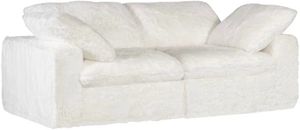
An apartment or a small living room rarely has a wall run long enough for a sprawling group plus a real walkway, and this two-piece configuration is built for that constraint. It gives you a genuine corner seating zone without spending the floor you still have to walk across. The Natural finish sits at the warm oatmeal end of the white family, the end that quietly absorbs household dust and light soil instead of showing every speck. Bring the wall length and doorway measurements from earlier and our team will check them against the current specifications.
Top Features
• Two-piece footprint: Sized for apartments and small living rooms where a larger group would block a walkway or a door swing.
• Warm Natural tone: A soft off-white rather than a crisp white, which hides everyday dust and light soil better.
• Small-space corner layout: Creates a defined seating zone in a room that has only one usable wall run.
• Delivery access support: Our team confirms doorway, hallway, and stairwell clearances before the order is written.
Hooker Furniture SS Barefoot 3-Piece Yakety Yak Natural Small Spaced Sectional Sofa
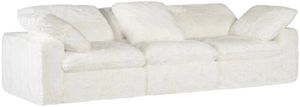
Plenty of rooms fall into an awkward middle, too big to feel right with a two-piece group and too tight for a full great-room layout. The three-piece configuration is the standard answer for that space, adding a third seat without pushing the return into the traffic path. It stays in the same Natural tone as the rest of the collection, so the same soil-hiding advantage applies to the head rest band and arm tops discussed earlier. Tape the footprint on the floor first, then compare it against the current specifications on the product page.
Top Features
• Three-piece configuration: Adds a third seat while keeping the overall footprint inside small-space limits.
• Balanced return length: Designed so the short leg of the L does not intrude on the main walkway.
• Consistent Natural finish: The same warm off-white tone across all pieces, which keeps the group looking even as it ages.
• Room-fit verification: Bring your measurements and our team compares them against the current dimensions before purchase.
Hooker Furniture SS Barefoot 4-Piece Yakety Yak Natural Modular Sectional
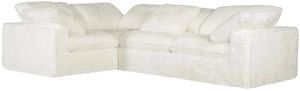
Some rooms have a traffic path that refuses to cooperate, running straight between the entry and the kitchen or cutting past a slider. A modular four-piece group solves that by letting you build the layout around the path instead of fighting it, then rebuild it after a move or a television relocation. It also delivers on the soil map idea from earlier, since individual sections can be swapped into lower-traffic positions as they wear. The Natural tone carries through, keeping the whole group visually consistent.
Top Features
• Four modular pieces: Reconfigure the layout around doorways, sliders, and the room’s actual traffic path.
• Wear rotation: Move a hard-used section into a quieter position to spread visible aging across the group.
• Easier delivery access: Individual modules travel through tight doorways and stair turns that a one-piece frame cannot clear.
• Warm Natural upholstery: An off-white tone that stays forgiving in a room where people cut through daily.
Hooker Furniture SS Barefoot 5-Piece Yakety Yak Natural Modular Sectional
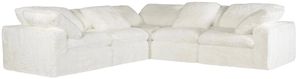
Open-plan great rooms have the opposite problem of a small living room. With no walls to define anything, seating has to draw the line between the living zone and everything else. Five modular pieces give you the length to do that, whether you run a long L along the main sightline or close it into a U for a household that fills every seat on game night. Because the pieces are modular, the same group can be split across two rooms later. The Natural finish keeps a large expanse of light upholstery from reading stark.
Top Features
• Five-piece scale: Enough length to anchor an open-plan great room and define the living zone without walls.
• L-shape or U-shape: Configure the group as one long run or close it for maximum seating capacity.
• Splits between rooms: Modular sections can be divided later if the household layout changes.
• Soft Natural tone: A warm off-white that keeps a large seating group from feeling cold in an open space.
Universal Explore Home Rhodes 5-Piece Oris Snow Power Reclining Sectional
Shop Power Reclining Sectionals
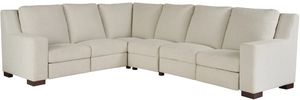
This is the true white end of the range. Oris Snow reads as an actual white rather than the warm Natural of the pieces above, and it pairs that with power reclining across a five-piece group. Two planning points matter before you order. Reclining backs need clearance behind them, so measure the gap to the wall and confirm the required distance for these specific seats rather than assuming. Power seats also need a grounded outlet within reach of the frame, so plan the placement around an existing receptacle or arrange for one.
Top Features
• True white Oris Snow finish: The crisp end of the white range, sharpest in rooms with cool gray or blue-toned floors.
• Power reclining seats: Motorized recline with button control, which is easier on knees and backs than a manual handle.
• Wall clearance planning: Confirm the space needed behind the reclining backs before finalizing the layout.
• Outlet requirement: Each powered section needs access to a grounded outlet, so plan placement around existing receptacles.
• Five-piece capacity: Built for a family room where several people want a reclining seat at the same time.
Come see and touch these fabrics in person, ask our team for a swatch to take home, and let us handle delivery and setup so the pieces arrive assembled and positioned correctly.
Ready to Bring Home a White Sectional Sofa Built to Last? Come Sit on It First
The fabric and its cleaning code decide what daily life with the piece feels like. The frame, suspension, and cushion cores decide how many years it stays comfortable, and the right tone within the white range keeps it looking fresh between cleanings. Add a short weekly routine and a white sectional sofa stops being a risk and starts being a piece you keep.
Come visit Kelley Appliance Center to compare fabrics side by side, request swatches to live with at home, and sit on the configurations you are weighing instead of guessing from a photo. Our staff know the construction details behind each piece and will tell you honestly which fabric suits your actual household, not the one in the catalog photo. We handle professional delivery and setup so the sectional arrives assembled and placed, and after the sale you reach real local customer service instead of a call center. That is what buying from an independent retailer gets you.
Frequently Asked Questions about White Sectional Sofas
No, a white sectional sofa works well with kids and pets as long as the fabric is a cleanable performance weave and the covers come off for washing. Most regret traces back to a delicate fabric with a solvent-only or professional-only cleaning code rather than to the color itself.
The best fabric for a white sectional sofa is a tight-weave performance polyester or a moisture-barrier performance fabric carrying a code W or code WS cleaning label. Those fabrics let you flush a spill with a water-based cleaner at home instead of scheduling a professional visit for every accident.
Vacuum weekly with an upholstery attachment, rotate reversible cushions, and treat the head rest band and arm tops before a shadow builds, since graying is body oil rather than dirt. Keep direct south-facing sunlight off the piece with window treatments or periodic rotation to prevent yellowing on fibers prone to it.
Yes, when the manufacturer labels them washable, and the rules are cool water, a gentle cycle, and low or air drying. Put the covers back on while slightly damp so they stretch to a tight fit, because high dryer heat is the actual cause of most shrinkage complaints.
Choose true white for modern rooms with cool gray or blue-toned flooring and paint, and choose ivory, cream, or a natural oatmeal tone for warm wood floors and higher-traffic households. The warmer undertones hide light soil and dust noticeably better, while true white makes the most sense when the covers are washable.
A well-built sectional with a kiln-dried hardwood frame and high-resiliency foam should give you seven to fifteen years of comfortable service, and the frame commonly outlasts its original upholstery. Replaceable cushion cores and removable covers are what stretch the upper end of that range.
Why Trust Kelley?
For over 50 years, Kelley Appliance has been the trusted, family-owned source for home needs in the Central Savannah River Area. When you shop with us, you're not just a customer; you're our neighbor. We take pride in providing a hassle-free experience built on honesty and integrity.
Recognized as the #1 Appliance Store, our Kelley Augusta, GA location specializes in offering a wide selection of top-brand appliances at competitive prices. Our Aiken, SC, location expands on this, providing both appliances and home furniture to meet all your home furnishing needs. With fast delivery and flexible financing options, experience the Kelley difference and see why generations of families trust us to make their home a true haven.
Learn more: